Tuscany is not a place, it’s an experience, like stepping into a Renaissance painting. Rolling hills, cypress-lined roads, and fields of sunflowers that stretch endlessly, with medieval villages perched on hilltops like watchful guardians of history. Every drive through the countryside feels like a journey back in time, where rustic farmhouses and olive groves whisper stories of centuries past.
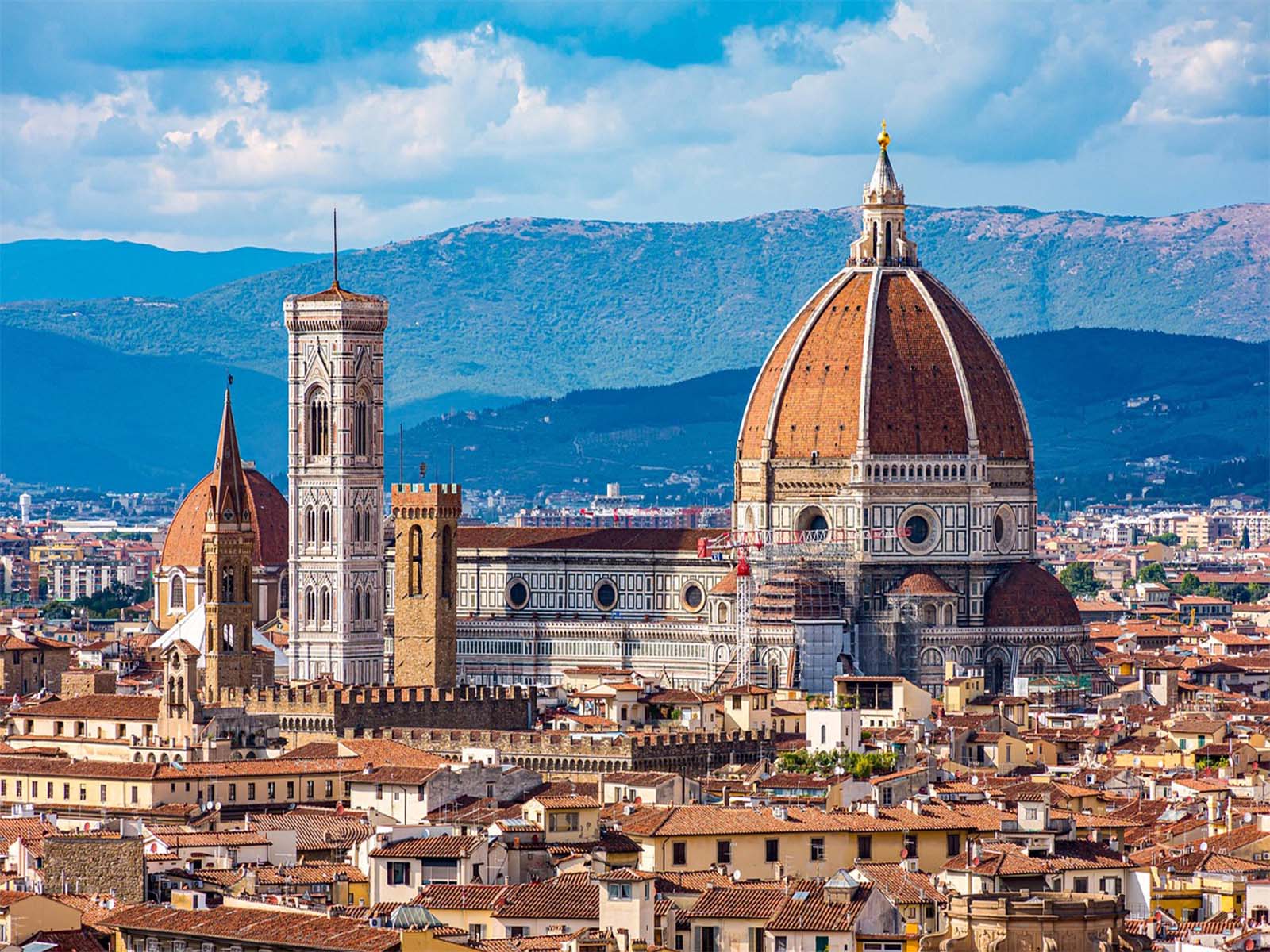
My first stop was Florence, the jewel of the region (and home to Ferragamo 😊). Standing before Michelangelo’s David left me awestruck, and walking beneath Brunelleschi’s Dome felt surreal. The Uffizi Gallery with its overwhelming beauty, had each room filled with masterpieces I had only seen in books. Yet, what I loved most about Florence was its balance between grandeur and daily life—open-air markets buzzing with chatter, riverside cafés perfect for an espresso, and boutique shops tucked into winding streets. I was glad I’d decided to splurge and spoil myself with two nights at The Baglioni Hotel; pricey but sooooo beautiful it was worth it!
From there, my next stop was Siena, where the fan-shaped Piazza del Campo seemed to pulse with life. I could almost imagine the Palio horse race thundering through the square. San Gimignano, with its iconic towers, transported me to the Middle Ages, while Cortona charmed me with its cobblestone alleys and sweeping views over the valley below. Each town had its own character, but all shared the same timeless Tuscan spirit.
Food and wine were as much a part of my journey as the art and landscapes. The array of Tuscan spread and wine is a treat to every palate!! I savoured bowls of ribollita, twirls of handmade pici pasta, and, of course, the famous bistecca alla fiorentina—perfectly grilled and shared with a glass of Chianti. Visiting vineyards in Chianti and Montalcino was an experience not-to-be-missed. The Castello di Brolio in Chianti belongs to the Ricasoli family, one of the oldest wine-families in Tuscany. The estate is often credited with helping define what Chianti Classico is today! Their award-winning wines made Castello Banfi an obvious choice for me to visit. Established in 1978 by the Banfi family, the vineyard is situated in the 9th century Castello di Poggio alle Mura, adding a deep historical layer to the winemaking experience.
One afternoon I decided to treat myself to the region’s thermal springs. Reclining in the warm mineral waters, surrounded by peaceful countryside, I felt a sense of rejuvenation I hadn’t known I needed. I also ventured to the Tuscan coast, where sandy beaches and quiet fishing villages offered a quaint and refreshing contrast to the rolling inland hills.
What struck me most about Tuscany was how life seemed to slow down. Meals lingered for hours, sunsets painted the sky in gold, and even the simplest moments—walking through a vineyard or sitting in a piazza—felt extraordinary. Tuscany isn’t just a place to visit; it’s a place to savor, to breathe, and to remember.
0